Sunday, November 10, 2013

The Black Prince as an Example of Great Art

Iris Murdoch’s cleverness is beyond the scope of this blog post and its author is inadequate to demonstrate how great Murdoch’s novel is as a work of art. However, I can write that Murdoch provides her reader with much to think about with many intertextual elements to mine, as well as creating a work that meets her own definition of great art.            
               Murdoch (Against 20) writes that great art does not console but rather “helps us to recover from the ailments of Romanticism.” These ailments include “dryness,” the residue of Romanticism after the “messy” humanitarian and revolutionary elements have spent their force. This means the loneliness of rationality and “freedom” (Against 18), together with “a dangerous lack of curiosity about the real world, a failure to appreciate the difficulties of knowing it” that is induced by a “simple-minded faith in science, together with the assumption that we are all rational and totally free.”
The Black Prince is not a novel that falls to the temptation of consoling the reader. The narrator, Bradley Pearson, is not completely rational in his relationships with any other characters in the novel.  Murdoch seems to bring her characters to the edge of reason (and, in the case of Priscilla, beyond it). In Murdoch’s novel, the world is unstable, unpredictable, difficult to know, and no one seems in control with the freedom to make choices in their own self-interest. Bradley is unable to go to Patara or to write; Arnold is unable to resist Christian; Francis is constantly inebriated and broke; and Rachel cannot keep her hands to herself. Furthermore, the irony of the novel is that Bradley Pearson’s work of art that he successfully writes, his “‘art object’” (72), is about the failure of his life (Baschiera). It is difficult for the reader find consolation in this conclusion.
               In addition to adhering to her own principles of great art, Baschiera (48) writes that Murdoch’s novel also “takes advantage of stock incidents and devices traditionally belonging to Elizabethan theatre.” Examples of these incidents in the novel include a cross-dressing Julian, Arnold’s letter received by Bradley and read by the wrong person (Rachel), a character playing the fool (Francis), among others. The novel also includes elements of Shakespeare’s Hamlet. Bradley shares Hamlet’s inability to act, and when he does act, it is sometimes rashly. The novel also borrows from Hamlet the idea of constantly keeping the audience on edge, rather than letting them settle into a predictable narrative. The situation in which Bradley finds himself is constantly changing, and the more he tries to control it, such as trying to prevent Arnold from having anything to do with Francis and Christian, the more out of control it becomes.
               These allusions to Elizabethan drama and borrowings from Hamlet contribute to what Sanders (25) calls an “inherent sense of play, produced in part by the activation of our informed sense of similarity and difference between the texts being invoked, and the connected interplay of expectation and surprise, that...lies at the heart of the experience of adaptation and appropriation.” Murdoch seems to play consciously with the elements of drama and weave them into The Black Prince. It seems that Murdoch intentionally “misreads” and “misprisons” the work of Shakespeare’s Hamlet (Bloom). This ability of Murdoch’s, to take Shakespeare and re-imagine elements of it into a different generic form, is another aspect of her work that makes it recognizable as great art.

               If it is assumed, and I confess that I do, that Murdoch’s opinions on great art are worth considering and applying, and that her ability to capture and rework elements of Shakespeare into The Black Prince is part of the pleasure of reading it, then The Black Prince is an example of great art. Besides, would you argue with this (Murdoch’s) face?
nndb.com
Works cited:
Bloom, Harold.  The Anxiety of Influence:  A Theory of Poetry.  New York, Oxford UP:  1973; 2nd edition, 1997.

Dente Baschiera, Carla.  “Re-Inventing Ambiguity in the 20th Century:  Iris Murdoch’s The Black Prince.”  Textus 11.1 (1998):  45-64.

Murdoch, Iris.  “Against Dryness:  A Polemical Sketch.”  Encounter 16 (1961):  16-20.            

Murdoch, Iris.  The Black Prince.  New York:  Penguin, 2003.

Sanders, Julie.  Adaptation and Appropriation.  New York:  Routledge, 2006.

Saturday, November 9, 2013

Bradley’s Hamlet lessons with Julian

On page 152 of The Black Prince, Bradley and Julian discuss Gertrude’s involvement in the King’s murder from Hamlet. Julian feels that Gertrude may have had a hand in the murder with Claudius. She also expresses the idea that Gertrude and Claudius may have had an affair prior to the king’s murder. She states, “I think some women have a nervous urge to commit adultery, especially when they reach a certain age” (Murdoch 152). This hints at the possible link between Gertrude and Julian’s mother, Rachel.

Bradley feels Gertrude is definitely not involved in any way with the murder and did not have any previous relationship with Claudius. Bradley feels Hamlet is Shakespeare (see pages 185-195) and that Hamlet had an Oedipus complex and was a homosexual and involved romantically with Horatio. Bradley quickly dismisses anything negative with Gertrude, likely because of his obsession with his own mother. These Hamlet interruptions in the novel mirror the plotline and foreshadow what is to come. Julian asks, “Why couldn’t Ophelia save Hamlet?” which Bradley responds, “Because, my dear Julian, pure ignorant young girls cannot save complicated neurotic over-educated older men from disaster,” (Murdoch 188). This of course foreshadows Bradley’s demise at the end of the novel, something Julian could not prevent.

Of course, with my adamant feelings regarding Gertrude, I feel Murdoch would agree with me on Gertrude’s involvement in the king’s murder. Sure Bradley disagrees, but Murdoch obviously fashioned Rachel to mirror Gertrude, and Rachel is manipulative and conniving and self-preserving at all and any cost. She even states that “I won’t save [Arnold, her husband,] at the end. I’ll watch him drown. I’ll watch him burn” (Murdoch 33). I feel it is pretty clear that Rachel is a smart, strong woman, which the very same can be said about Gertrude. Gertrude had her own power, and I feel she used that power to allow and influence the downfall of a king.


Is Bradley Pearson a reliable narrator?

Throughout the novel, The Black Prince, I wholeheartedly believed what Bradley told me. As the reader reading a tale in first person I felt I had to believe him. In lying to me he would be lying to himself, and what type of person would do that? I sure wouldn’t! At least not intentionally. There were several times in the novel where I found certain facts a little difficult to believe, the most important would be how Bradley had all those women just begging to get in his pants. He’s self-described and interpreted by the reader as a bitter old man. He describes himself as “thin and tall, just over six feet, fairish and not yet bald, with light fine silky rather faded straight hair. [He has] a bland diffident nervous sensitive face and thin lips and blue eyes” (Murdoch 15-16). That description does not sound very tempting to me, but apparently Rachel (a married woman), Christian (his ex-wife), and Julian (a naïve young woman) just can’t seem to get enough of him and are willing to risk anything and everything to be with him…not to mention Francis hits on him and constantly ties to convince reader and Bradley that Bradley is gay. Bradley’s manic personality change when he falls in love with Julian is also disconcerting to the reader…is he crazy or is he sane (a very Hamlet-like confliction).

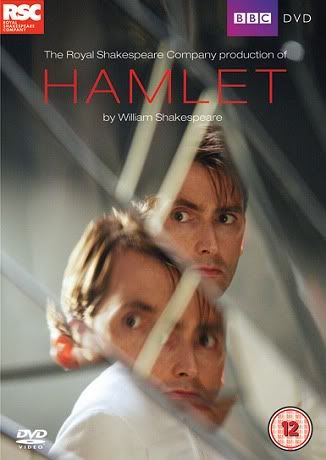
(I like this photo of Hamlet—it shows his shattered self well)

However, it is in the postscripts that I completely lose faith in Bradley’s reliability. He admits that during the trial of Arnold’s Baffin’s murder that (under oath!) he changed his story over and over again: “As the time went on I tried various attitudes, said various things, changed my mind, told the truth, then lied, then broke down, was impassive, then devious, then abject…Perhaps at moments I almost believed that I had killed [Arnold], just as at moments perhaps [Rachel] almost believed that she had not” (Murdoch 374).

It also doesn’t help Bradley’s case that Christian causally discredits him at every turn and Rachel belittles his every account. Julian, possibly the one person the reader could rely on chooses instead to state she cannot accurately recall the change of events that transpired. The readers are left to decide for themselves. Personally, I want to believe Bradley, but I do not feel he’s told me the whole truth…


Tuesday, November 5, 2013

The Black Prince

Once again, this novel is confusing me- it just doesn't feel like a Hamlet offshoot.


I guess what I'm trying to say is that these novels are not what I expected. When I heard that we would be reading novels that were the aftershocks of Hamlet, I thought we would be seeing retellings and observing how the plot elements were reused and altered, it's genesis and journey to the modern era. What I seem to be getting is a series of sad novels that reference Hamlet as a model for the misery they are trying to convey.

I really wonder how much The Black Prince would have actually been affected if Hamlet were never written. Would the events play out pretty much the same, only they would be discussing and referencing some other supposed greatest work? And what would that be? Is the real finger print of Hamlet here that of the unique character? Is there another person in all of literature that could replace Hamlet's role in this story.... You know, I think there isn't. Maybe that is what I should be focusing on.

There are plenty of other Hamlet like flavors: people haunted by their past and future decisions, plots,  violence, murder, imprisonment and banishment. Still, I keep arriving at the same hang up. Shakespeare didn't invent ghosts, death, vengeance or banishment. He arranged them in a way... In a way some people argue has already been done. So what's here, really? The story is once again missing the central plot point: Bradley isn't seeking vengeance for a dead relative. He's seeking quiet study. All the other elements are as old as the beginning of the human drama. Shakespeare's only unique contributions to the play lay in beautiful words and a singularly complicated character. I wouldn't call Murdochs writing exactly beautiful. It's a bit blustering, long winded and it show boats. But Bradley is almost complicated enough and almost true enough to be a spiritual successor to Hamlet